Thursday, 13 March 2014

The Heroes We Choose - Harry Ferguson - The Greatest Irishman You've Never Heard Of.


* Another long post with some hi-falutin theories - so maybe try this one with some biscuits and a cup of tea.

I love the story of Harry Ferguson - An inventor, a truly great man, a genuine genius and also a maverick. He should be an inspiration for every Irish schoolkid, but today he is virtually forgotten. 

Those who know about him - and about his life & work - will rate him one of the greatest Irishmen of the 20th Century. And the story of the Tractor Wars he fought with another great Irishman - Henry Ford - and his grandson - has long fascinated me. 

I think the heroes we choose say a lot about us. And I wish more people knew about Harry Ferguson. 

The Great Harry Ferguson 

·       Holding Out For A Hero – John Wayne, Tom Crean & A Short History of Tractors In Irish-American.


You can tell a lot about a people by the heroes they choose – and by those they choose to forget.

In the post Good Friday Agreement/Celtic Tiger era, we saw the rise of The Legend of Tom Crean, a blessedly apolitical hero for a rapidly changing country that wanted to put the firebrands and Men In Uniform behind us. Crean shot from historical footnote to cultural icon, starting with the publication of Michael Smith’s An Unsung Hero: Tom Crean Antarctic Survivor in 2002. 

A very successful, multi-award winning one-man play – Tom Crean – Antarctic Explorer (written and performed by Aidan Dooley) followed, as did an iconic, lavishly produced Guinness ad. And when a historical figure is co-opted by Diageo to sell stout, you know they have really arrived.


Tom Crean - Antarctic Explorer 

Crean was and remains The Perfect Irishman, an ad-man’s dream despatched straight from central casting. Strong, silent, ready to undertake epic acts of heroism without a word of complaint. 

The stoic, handsome Kerryman who played a vital part in one of the most heroic tales of the 20th century and then came home to quietly run a pub, was the man most Irishmen would want to be.


Young Tom ran away to sea when he was 15, leaving the family farm in Kerry, took part in three of the four major expeditions of the Heroic Age of Antarctic Exploration and was part of the legendary sea crossing to South Georgia, an almost insanely audacious mission to raise help for the stranded men of the ill-fated Shackleton expedition at the height of the First World War.

The fact that he never sought fame, that he was simply content just to do his job and put his life on the line for his mates, made Crean all the more attractive.

An Iconic Shot Of Crean


In the ‘50s, John Wayne and John Ford gave us The Quiet Man, the Yank cousin made good.  Sean Thornton was a Big Fellow across the water, a sugar-coated wonderland when compared to the monochrome, repressed world of early 1950s Ireland. 

Sean was still recognisably Irish, still handy with his fists, a hit with the dames and fond of a drop. But the ex-boxer returned home was beholden to no bishop or bossman. An unapologetic, freeborn man of the USA.


The Man Could Wear A Cap - John As Sean


But Sean Thornton only had a brief reign. From the ‘60s onwards, as Ireland started to become more Technicolor than John Ford’s classic slice of Faith ‘n Begorrah ever was, Two-Fisted Sean Thornton became a bit of a joke.

However, we would have need of a Quiet Man again.

In the noughties, we started to seriously lose the run of ourselves, as Irishmen struggled with metrosexuality and dressed as if they had been covered with glue and fired through the designer racks of Brown Thomas. 

And Crean, the rugged Kerryman with the soft eyes who conquered the Antarctic, remerged from the shadows to remind us of who we were supposed to be. Who we wanted to be.

Bertie Ahern’s weirdly suburban vision for the men and women of Ireland was of Boy Bands and Chick-lit, faking it in Range Rovers and holidaying on golf courses in Alicante, mortgaged to the hilt but still spending.

But even at the height of bland, beige Bertism, most of us still had a vague notion of a real Irishman. 

And we recognised it in Tom Crean. It didn’t matter that he must have been a more complex man than the legend would have it. He really was a hero. And just as importantly in the new, post-Troubles Ireland, he didn’t kill anybody to become one.

For the largely confused Irish male, Tom Crean represented the father or grandfather we wanted to have. The “Giant Irishman” who cuddled sled dog pups and ripped up ice-bergs with his bare-hands. 

However, while Crean’s uncomplicated heroism is to be admired, there is one man, great in many ways, problematic in others, of whom you really could make the argument for being the Greatest Irishman of the 20th Century.

He had a global impact and a legacy that still remains strong to this day.  A maverick and a genius, he revolutionised agriculture and agri-business. His inventions vastly increased crop production and helped save millions of lives in a starving, shattered Europe after the Second World War.

And this man, Beflast-born Harry Ferguson, is virtually forgotten. Ask 100 members of the Irish public to tell you who Harry Ferguson was, and it’s doubtful even one could. Strangely, it’s entirely possible that there are more Ukrainians than Irish people who have heard of Harry Ferguson (as the inventor of the modern tractor, Ferguson is something of a hero to many Ukranians and even merits a long tribute in Marina Lewycka’s popular novel, A Short History of Tractors in Ukrainian as a “genius inventor” who “contributed richly to the history of mankind”).

Ferguson was hot-headed, mischievous and teak-tough. He was an engineering genius, an innovator and the first Irishman to fly. 

Young Harry was inspired by the Wright brothers and resolved to build his own plane. 

After a few false starts, he finally took to the air in his own monoplane from a park just outside Belfast on December 31st, 1909. It was just a few weeks after his 25th birthday and only five years on from the historic Wright Brothers first flight. 


Ferguson With His Plane - First In Flight

It was also very early in the history of aviation, a former Wild West showman called Samuel F Cody had made the first powered flight in Great Britain only a year before. 

And the American didn’t build his own plane.

In his youth, he was also motorbike racing champion and a gun-runner for Ulster Loyalist paramilitaries.
Ferguson had been born in the village of Dromore, 16 miles from Belfast in 1884 (Crean was born in Annascaul, Co Kerry in 1877). His family were deeply religious (members of the strict Plymouth Brethren sect), but from an early age Harry was a declared agnostic, a decision that ruined his relationship with his father.
In his early years, the only matter on which father and son saw eye-to-eye on was his support for hard-line loyalism.
As a teenager, Ferguson was actually on the point of emigrating to Canada, to escape Belfast and his father, when he older brother persuaded him to become an apprentice at the family bicycle shop on the Shankill Rd.
The self-taught mechanic quickly became fascinated with motors and speed.
Ferguson threw himself into the rapidly growing motor racing scene in Ulster, quickly earning himself the nickname “The Mad Mechanic” thanks to his reckless, take-no-prisoners style.
He also got deeply involved in Ulster Loyalist politics. In 1914, Harry and his wife Maureen Watson (they had been married for just a year) took part in the landing of guns at Larne for the Ulster Volunteer Force. It was at a time when loyalist and nationalist private armies, in Belfast and Dublin, were arming themselves for the conflict most expected to come.

Drama enough for ten lives. But it was when Harry Ferguson, of Dromore, Co Down, went to war with Henry Ford Jnr, of the Ford Motor Corporation, Detroit, that the Mad Mechanic really hit the world headlines.
The Tractor Wars – Ferguson V Ford – was the most high-profile industrial rights court case of the 20th century, a knock-down, drag-out battle between an Ulster-Man and the Irish-American boss of the world’s biggest vehicle manufacturer. Maverick, stubborn genius against cold, corporate ruthlessness.

And this $251million dollar court battle (that’s 1948 dollars) hinged on a handshake, a “gentleman’s agreement” between Ferguson and Henry Ford Snr.
As well as the millions of dollars at stake, it was a fight for the right to claim an engineering breakthrough that changed farming from the Steppes of Russia to the Canadian prairies and saved millions of lives after the devastation of World War II.
Ferguson With His Creation - The TE20 "Little Grey Fergie"

**** The Tractor Wars****
In 1938, Ulster-man Harry Ferguson was invited to visit Henry Ford Snr, the son of a Cork-born farmer, at Ford HQ in Dearborn, Michigan.
Ferguson brought with him a tractor that he had designed and built, with a revolutionary hydraulic linkage system that represented a quantum leap forward. It was the Model T of Tractors but so much more (one of Fergusons early tractor designs had been based on a Model T and he had been in contact with the Ford Company since the 1920s).
The Ulster man was – as he saw it – on a mission to change the way the world produced food. He really believed his invention, the greatest leap forward in agriculture since the invention of the plough, could feed starving millions.
He said; “There must be implements of an altogether new type which will produce, for the first time in history, enough food to feed all the people of the world. And, also, produce from the land – the source from which all wealth comes – a new wealth to enrich the world”.
Henry Ford recognised brilliance when he saw it. Ferguson’s creation far outclassed anything Ford or any other manufacturer could come up with.
After protracted negotiations, the two men (who had more in common than they perhaps realised and a great respect for each other) came to a gentleman’s agreement. A handshake sealed the only partnership Henry Ford ever went into. Ferguson would provide the genius, Ford, the manufacturing power.
However, when Ford Snr died in 1947, his grandson Henry Ford II soon realised that his grandfather had made the worst deal of his life. And moved to end it.
Harry Ferguson felt he had no option. He hired the best lawyers he could afford and went to war with Ford in the US courts.
This dramatic court case would decide who could lay claim to the biggest breakthrough in agriculture of the 20th century – and the billions of dollars that would flow from this in the decades to come.


****THE COURT CASE*****
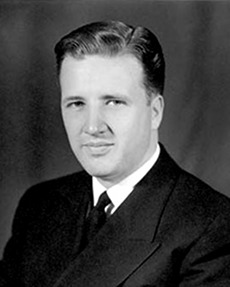
Henry Ford II


Harry Ferguson was in bullish form - even as he prepared to enter a New York courtroom in 1948 to face the might of the Ford Motor Co.
"It'll be a grand fight," he told reporters on the steps of Manhattan’s Federal Court.

What followed was a titanic, four-year court-room battle, Ferguson had slapped a  $251 million antitrust and patent infringement suit against Ford Motor Co., its subsidiary, Dearborn Motors Corp., Henry Ford II and other Ford officials.


The battle centred on the handshake agreement made between Old Henry and Harry in 1938.


In the first seven years of the agreement, the Ford Company made 303,501 tractors to the Ferguson design, as well as licensing related farm implements (all to the Ferguson system) $313 million, netting Ferguson $4.3 million in 1946 alone.
But the Ford company itself, said young Henry, had lost $25 million on the deal.
He decided to set up his own company, Dearborn Motors Corp., to market his own tractors. Ferguson took one look at the “new” Ford tractor with its hydraulic lift, and filed suit.

Ferguson also took the brave step of setting up his own plant, right on Ford’s doorstep in Detroit, to manufacture a rival tractor. In effect, there were two versions of the Ferguson tractor being made in the US, one by Ford, one by Ferguson.

Alarmed by the competition, Henry Ford (Young Henry) visited Ferguson in England to try and reach a settlement. Ferguson said no. He wanted to be paid what had been agreed by Old Henry.

In the first year of the suit alone, both sides spent an estimated $300,000 each on legal expenses, two armies of lawyers faced each other in Manhattan as the world’s media looked on.

Ferguson won several battles but lost the war - he could not prove that Ford had stolen his ideas to monopolise the tractor business.

After four years, an out of court settlement was finally reached.

The cost to Ford was $9.25m - at the time the biggest patent settlement ever paid in a U.S. suit. In the settlement, Ford conceded that it had infringed Ferguson's patents by copying the hydraulic valve, coupling system, and the power-take-off setup, and agreed to make restitution to Ferguson on the basis of about $21 for each of the 441,000 tractors Dearborn Motors has made since mid-1947 (Ferguson had asked $100).
Ford also agreed to alter the designs of its own tractors enough to remove any further infringement.

Ferguson had proved that his designs had been the “inspiration” behind the Fordson tractor. He had been vindicated as the designer of the modern tractor which has remained largely unchanged to this day. But he had lost out on millions in future profits.

His great legacy is the modern agricultural tractor and the three-point linkage system which revolutionised farming across the world and helped to feed millions of starving people after WWII.

He also came up with the four-wheel drive system used to this day on everything from suburban SUVs to military vehicles.
His “Little Grey Fergie” TE20 Tractor and his linkage-system could be argued to have saved as many lives as the development of penicillin and drought resistant wheat. Ferguson's avowed aim – as an inventor – was to save the world from hunger through cheap and reliable farm mechanisation.
A maverick, a genius, an Ulster-man. An Irishman. So we have to ask, why no statues? (apart from one at his birthplace in Co Down). Why no best-selling biographies or million-dollar Guinness ads? Why do we celebrate Tom Crean and not Harry Ferguson?
Crean was an undoubtedly remarkable man, his epic journey to South Georgia Island saved the lives of 27 men.
Ferguson saved the lives of millions, his legacy lives on, not just in the Massy Ferguson tractor corporation but also on farms all over the world.
But Harry Ferguson was a complicated man with a complicated story. He did not have heroism trust upon him, as Crean did (though he rose magnificently to the challenge) but shaped the world as he wanted to see it. He actually did more than that, he grabbed it by the throat.
There is also the complication of his early and vociferous support for Ulster Loyalism, perhaps a big factor in him being virtually forgotten in the Republic. Even though his Little Grey Fergie is revered by tractor enthusiasts to this day.
There is an iconic photograph of Crean in Antartica, holding a litter of sled dog puppies, pipe in mouth, he looks rugged yet kindly, a soft-eyed Irishman.
The photos of Harry Ferguson show a serious, scientific or business looking man with wire-rimmed spectacles and a receding hairline. His gaze is myopic but steady, challenging, even.
Crean – or at least The Legend Of - is cast in the great heroic tradition of Ireland. The quiet man, the rugged farmer who rose to the challenge. The hero who never failed his friends and comrades yet gladly walked off the pages of history to find a quiet life far from the city.
Ferguson understood business, he instinctively understood globalisation long before the term was coined. He was from a farming background himself but looked out into the world and the new possibilities of the 20th century.
He built his empire and fought those who tried to take it from him.
In the 21st century, the two men represent a strange fault-line in our national psyche and our identity (especially in how Irish men see themselves).
Our most successful businessmen, from international telecom entrepreneurs to budget airline bosses, still want to be seen as, at heart, one of the lads, fond of a pint and a football match. Able to mix it with peasants and kings and enjoy the company of both.
Sons of the soil or thrusting entrepreneurs? Catholic or protestant, nationalist or loyalist, GAA or golf?
So we choose to beatify of Tom Crean and forget Harry Ferguson.

But the heroic age is long gone (and wasn’t even very heroic at the time).
ENDS 

Wednesday, 12 March 2014

Inspire Me Bollix - A Calm, Considered Analysis Of That Ireland - Everything Is Awesome! Video.


* So Are You Feeling Inspired Yet?

                                                      Feel The Guff, Baby!


This morning, Irish people all over the world woke up to a request that they be inspired. From their Government. A bunch of lads not particularly famed in song and verse for inspiring anything other than a urgent need to emigrate and/or burn Leinster House to the ground.

The Inspire Ireland video, three minutes of Lovely, Lovely Irish Irishness that don't so much tug at the heart-strings as go at them with a chainsaw, would bring a tear to your eye. Or a little sick into your mouth. Depending on how ready you are to be "inspired" by a country that has, since 2009, inspired 300,000 + people, mostly young, to get the hell out as fast as the passport office could process them.

That's famine level emigration. Or what one report recently called a "devastating blow to the Irish economy that could be felt for decades".

Have a look at this BBC report for the alternative view - BBC - Youth Emigration Will Be "devastating" for Irish Economy.

How many of the young hurlers featured in the Inspire Ireland video are already in Australia or thinking of joining their brothers, sisters, cousins and best friends out there?

Call us a curmudgeon, call us a cynic. But isn't there something a little off, a little hollow, a tiny bit strange about a country that is mired in deep malaise, hit on a weekly basis by ever more bizarrely OTT scandals (Rehab being a case in point) and hemorrhaging citizens, needing to celebrate itself?

Ireland is deeply dysfunctional. We all know that. The evidence is all around us. Nothing works as it should. Ever pillar of society, from the church, to the banks, our politics, our business elite and our police force has crumbled or started to topple before our eyes over the past decade. There is no longer anything holding up the roof. It seems redundant to point that out, but we just can't seem to face up to the facts and deal with them. We retreat into some nebulous, warm and fuzzy cloud of Irishness. Sure we may be in dire straits, but we'll always have Jimmy Joyce, JFK and the Kilkenny hurlers. What THE FECK is wrong with us? Can't we deal with this like rational human beings, identify the problems and just forget the misty green hills for a second and start to sort it out?

Sure, the video looks lovely. But it's PR Guff. Slickly produced and very lovely looking PR Guff, but PR Guff all the same.

And you don't have to be a raging cynic to think; "Hold on a second, just who are the Government trying to reach here, Yank tourists or its own citizens, at home or abroad?"

One of the big growth industries in Dublin right now is in the area of PR/Consultancy/Propaganda, well-paid young men and women using every trick in the book to reassure us that it's all going to be great! Start selling houses to each other again! Sure the worst is over. WE ARE THE FIRST COUNTRY TO EXIT THE BAIL-OUT! ...unbelievably, that line is in there. Well lads, tell us the story of how we got into that particular jam in the first place? Using freckle-faced callins if possible. Because we still don't know, do we?

We're only just starting to find out about Anglo and as for the events on the night the Bank Guarantee was signed, you might as well ask about the Third Secret Of Fatima.

This celebratory tendency tends to ignore the fact that there has been zero visible root and branch reform. That nothing has really changed, that we have already wasted a once in a century chance to push the reset button and change the way this Republic works. And treats its citizens.

You can't really blame the Department of Foreign Affairs. They got a brief and a job to do. And to be fair, they did it brilliantly. The Inspire Ireland video did almost bring a tear to my eye, especially since I recently relocated to London for a bit and am missing home (it's weird, I used to miss Cork when I was in Dublin, now I miss Cork and Dublin because I am in England. I'm getting further and further away from home. And the cheese in the English Market).

If I was a Yank - I would be booking the first flight to Dublin.

It's all in there, the shots of strapping young hurlers in dusky light, the singers, poets, sportsmen and freckle-faced young boys and girls. It looks fecking gorgeous.

There is nothing intrinsically wrong with the video. But it is (unfairly or not) a reminder that we want to celebrate who we are without being truthful about it. We are as much Bertie Ahern as Henry Shefflin. Tom McFeely (the Priory Hall developer) as much as Michael Collins. Jedward as Thin Lizzy.

As one of our greatest politicians once pointed out (in song, no less) - we're all kinds of everything. Good, bad, ugly, brilliant, stupid, greedy, generous, inspired and dull.

But the one area in which we tend to fall down - is facing up to the cold facts and the tough job that has to be done. The house is on fire, so let's stick on the auld Riverdance DVD.

There's a shot of JFK in the video (and what exactly has that guy got to do with Ireland in 2014?) which suggests emigration was great for the likes of him. And it was. When JFK went back to Waterford during his 1960s visit he made a speech in which he speculated what would have happened to him if his grandfather had never left their ancestral home. He joked that he might have been working in the factory across the way. Well, if he had stayed, he be a raging alcoholic and a frustrated sex-maniac, getting a belt of the priest's blackthorn stick every saturday night. He would probably have gone quietly mad with frustration & potential denied, as so many Irish men of that generation did.

So watch the Inspire Ireland video, it's a great bit of work. But maybe you might want to think about Rehab and Bertie Ahern while doing so.

Oh, and happy St Patrick's Day, wherever you are! You'll never beat the Irish! Woo!


Tuesday, 11 March 2014

Keano V Bod - Sporting Icons - Class Warriors


* this post is a little something different and pretty Irish-centric - but stick with it because I'm trying to make a fecking point here.

Run Away! It's The KEANOBOD! (excellent illustration borrowed from the Irish Independent - it was used on a piece I wrote recently)


* I have a good friend who thinks I'm a little obsessed with the Class System - and how we never talk about it in Ireland. He would say that, 'cos he's a upper-middle class eejit.

My theory is - we have a very well defined class system, almost as well-defined as the British one. But while the British are almost painfully aware of the very clearly drawn lines that delineate their society (and rarely stop talking about them), we Irish like to pretend that sure we're all in the same boat lads! From the highest Captain of Industry or Politician to the lowliest street sweeper, you could put any two Irishmen on adjacent barstools and sure they'd find lots in common. Get on like a house on Fire. Bertie made great hay out of this tired old bollix.
What your father did, what school you went to, what sport you played and shout for, the music you listen to or the pubs you drink in - they all mark you down as something - whether it's a Culchie, a Jackeen (pejorative term for a working class Dubliner), a Rugger-Bugger or something else. 

I only need to ask you one question to know everything about you. Are you going to see Garth Brooks in Croke Park this summer? If you are, you're either a Muck-Savage, or that weird breed of Dublin GAA-head that's basically a Bogger In Denial (and one generation away from some Godforsaken hell-hole in Offaly). 

So when I heard that both Roy Keane and Brian O'Driscoll were working on new biogs, it made me think on how the two Irish Sporting Icons - while ostensibly having a lot in common - are actually perfect examples of the class divisions in Irish society (through no fault of there own, I might add, it's not as if Bod walks down Grafton Street wearing a monocle and whacking passing oiks with his malacca cane). 

And here it is - the Irish Class System explained with the help of a Hot-Headed Corkman and a Calm Suburban Dub. 

It's .....BOD V KEANO!
"Who are you callin' a sexy mother-fecker, like?"

Two Irish sporting icons. One, the Golden Boy with the perfect public persona and virtually spotless record, the other, spiky, cantankerous, fiercely charismatic and (in the past at least) deeply divisive.

Brian O’Driscoll and Roy Keane are currently working on major autobiographies and both are employing the services of heavy-hitting ghost-writers. Or at least BOD was, until a parting of the ways with Paul Kimmage.

Keane’s memoir, The Second Half, will be written by Booker-prize winning author Roddy Doyle and should be in bookstores this autumn. Publishers Orion say it will blend "memoir and motivational writing in a manner which both disquiets and 
reassures in Roy Keane’s own original voice".

Brian O’Driscoll’s biography is now on its second ghost writer - following the departure of respected sports journalist and former pro-cyclist Paul Kimmage. And while publishers Penguin Ireland have no confirmed release date as yet, Keano and Bod are expected to go head-to-head in the lucrative Christmas market at the end of this year.

For sports fans and the wider public in general, it should be a fascinating match-up between the two contrasting characters who have dominated Irish sport for two decades.

One is the son of two doctors with a solidly middle-class Dublin background that took in Blackrock College, a scholarship to UCD and a steady rise through the ranks to a glittering career.

The other is a working-class boy from Cork, who reacted to early rejection from pro clubs and the Ireland schoolboys’ setup (a coach later said he was “just too small”) by taking labouring jobs and writing to scores of clubs in England for a trial, before finally getting a late, late chance with Nottingham Forrest.

In the kind of simple terms that marketing men love, it’s The Golden Boy versus The Outsider.

O’Driscoll is already ahead in the popularity stakes. A national survey released last month saw 22 per cent of Irish adults name the Leinster and Ireland star as their most admired Irish sports personality. Katie Taylor came second with 13 per cent while Roy Keane trailed in third at 8 per cent.

The survey from industry experts Onside Sponsorship also confirmed that while the Irish public like O’Driscoll, major Irish businesses love him, with 37 per cent of potential sponsors choosing the rugby player as Ireland’s most marketable sports star.
Just 11 per cent of potential sponsors rated Keane the most marketable.

Red or Dead - BOD


However, the survey was carried out just before Keane’s dramatic return to the Irish set-up. And that unexpected move is likey to change the public's perception of Keane (especially if it goes well and we qualify for a tournament). 

Roy Keane – or at least our perception of him – may be changing. But when put head to head with Brian O’Driscoll, the contrasts between our two greatest sportsmen are glaring. And they include;

·      * Background

Class is an issue we don’t like to talk about in this country, it’s something that the British do and sure aren’t we all Irish, after all? But both men are very much products of their backgrounds. Keane, the working-class boy from the second-city (and a Northsider at that, a distinction that only Leesiders can really get), O’Driscoll, the middle-class Dub. The late-developing Corkman had to cope with lots of rejection in his teen years and scrap and scramble for his chance, O’Driscoll was almost fated from the start to shine.

Early Pic Of BOD


Keane - the soccer player. Traditionally a working class, urban game in Ireland. This has, of course, changed in recent years and there are plenty of middle class kids and men who will shout for Liverpool or Man U. But for the marketing men and many more, soccer is still very much a working and middle class game. The people with serious money (and the men who make the decisions in corporate Ireland) give their hearts to rugby (and golf).

Let's say one of the pillar banks want a "Face" for their marketing campaign. Do they get Roy or Bod? That particular decision will be made in about 2.5 seconds. Not just for reasons of class, of course. Keano is a little too controversial, a little too likely to speak his mind, to front a big marketing campaign.

Another point - and one that was pointed out to me - the "other" Keane, Robbie, has not exactly been embraced by corporate Ireland - strange given that he is the Republic's leading goalscorer, has a big profile at home and abroad (US soccer doesn't get much bigger than David Beckham's old team in LA). Probably a few factors at play here, but you are unlikely to see Robbie Keane fronting a big campaign for a pillar bank. 

·      * Education – Keane went to Mayfield Community School but left when he was 15. He was given an honorary doctorate from University College Cork in 2002 and last year began sponsoring a soccer-scholarship programme at the university.

O’Driscoll went to Willow Park primary school in Blackrock and then on to Blackrock College, before winning a sports scholarship to UCD where he completed a diploma in Sports Management.

·      *   Early Career

Keane had his well-publicised battle with booze, his share of pub brawls and by his own admission, came close to self-destruction. O’Driscoll had a few speed wobbles (the tragic bleached hair, below - the WAG-esque girlfriend) before knuckling down and becoming the ultra-professional rugby star and family man.


BOD GOES BLOND - What DAFUQ were you thinkin, man?


·       *  Family

O’Driscoll is (as you may have heard) married to the actress Amy Huberman, they have a daughter, Sadie.

Roy’s wife Theresa shuns the limelight, they have five children, ranging in age from 18 down, four girls Shannon (the oldest), Caragh, Leah and Alanna and one boy, Aidan (14 and an Arsenal fan).

·     *    Marketability

While O’Driscoll is heavily involved in the kind of commercial partnerships that go with modern A-list sports stardom (deals with the likes of Adidas, Gillette, Lexus as HSBC bank) Keane has mostly stayed away from major corporate sponsorship.

One of Keane’s few forays into that world, a big deal with soft-drink brand 7Up in the run up to the World Cup in 2002, turned into nothing short of a PR disaster when Keane (the face of the slogan “Clearly There’s No Substitute”) left Saipan and the Irish squad in a worldwide blaze of publicity (clearly, there would have to be a substitute).
7Up billboards nationwide were defaced by irate Irish fans and the soft-drinks company found itself in the middle of a second Irish Civil War.

Public Didn't React Well To Keano's Soft Drink Campaign Post Saipan


According to one Irish sports marketing expert I talked to, O’Driscoll will always have the edge; “The guys who make the decisions in corporate Ireland like rugby and they love Bod. He’s their kind of guy. That’s not usually the case with Keane and soccer in general.”
·     
   * Media

For years, journalists would make the annual pilgrimage south to the Irish Guide Dogs For The Blind HQ in Cork City for Roy’s once-a-year Q&A session. A dog-lover and patron of the charity, it was virtually the only Irish media appearance Keane would do (but was always worth hearing).

His punditry work with ITV – in which he regularly gives the hapless Adrian Chiles the terrifying Keano Stare while grimly laying into the consensus view – has seen him loosen up. And Keane’s seldom-seen but highly developed and mischievous sense of humour has been more on show. He’s very self-aware and likes to play around with the “Roy Rage” stereotype.

In his earlier years, Brian O’Driscoll had something of a reputation for showing up late to interviews and PR events. But these days he is the consummate media performer. The complete package.

BOD is also an enthusiastic Twitter user (as is his wife, Amy Huberman). Roy’s attitude to social media can best be summed up as “icy”.

·        * What They Have in Common

Simple - both intense, driven competitors, natural leaders, willing to put their bodies on the line. Both very smart about managing their careers (Bod may shade that) and shrewd with their contracts. They will both be idolised long after they finish playing. 

·     *    SO WHICH WILL YOU READ FIRST?

There’s a good chance that the first people seeking a look at Roy’s book will be lawyers acting for one A Ferguson and possibly the Glazers, current owners of Manchester United.

Roy’s previous biog with Eamon Dunphy famously didn’t pull punches. Or kidney-high tackles. But while we can expect the Corkman to be characteristically blunt, his new writing partner, Roddy Doyle (a Chelsea fan, by the way), may take a less dramatic approach to telling the story.

Expect plenty of headline making digs, kicks, revelations and recriminations. But also a more thoughtful, mature Roy. And lots about his management ups and downs at Sunderland and Ipswich.

Which would you read first? It has to be Keane, innit?


ENDS